
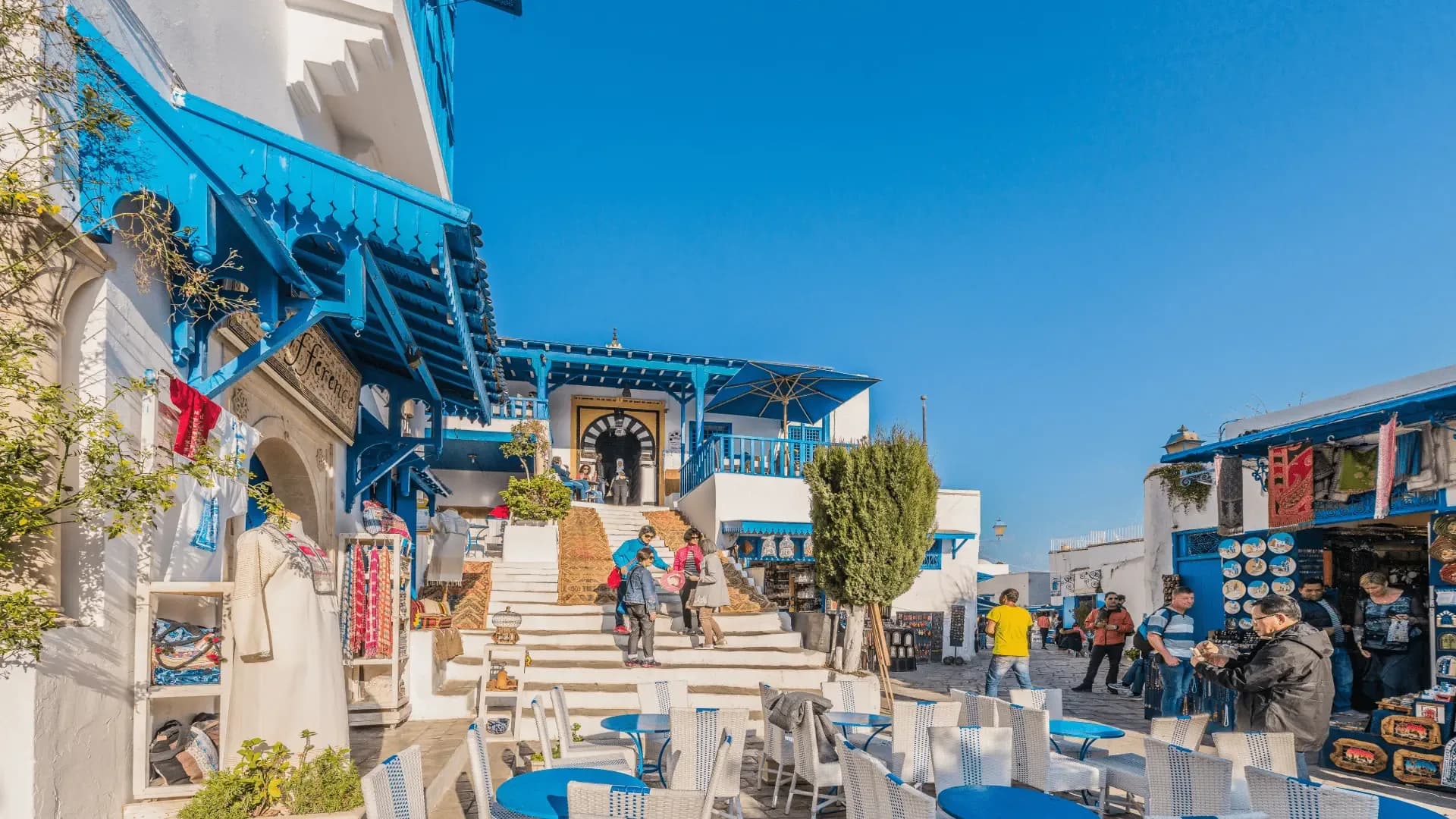
You have seen the photo: white cubes, deep blue doors, and bougainvillea spilling over a cliff above the Mediterranean. That is Sidi Bou Said, and it sits only about 20 kilometers northeast of Tunis. Many first-time visitors to Tunisia wonder if the village is really that pretty, whether it is safe, and how much time it deserves.
Short answer: yes to all three. Sidi Bou Said in Tunisia is a hilltop village named after a 13th-century Sufi saint, and its blue-and-white look comes from strict local building rules that date back about a century. It is calm and walkable, and it is comfortable for solo travelers and couples. Half a day is enough, but a full day works better if you add nearby Carthage.
Below, we cover what the village is famous for, what to see and do, how to combine it with the Carthage ruins and the beach below, and where to stay. We are a Tunis-based team, so the tips come from walking these lanes ourselves.
Why Sidi Bou Said is worth visiting
Take a two-minute look at the village before you read on:
A village with a color code
A proper description of Sidi Bou Said Tunisia in English starts with its palette. Walls are whitewashed, while doors, shutters, and window grilles are painted a deep blue. The rules protecting this look have been in place since the early 1900s, so you will not find neon signs or clashing colors.
Cobblestone lanes climb to a cliff above the Gulf of Tunis. From the upper terraces you get views across the gulf, the marina below, and late-afternoon light that makes the walls glow pink and gold.
Saints, painters and a palace
The village takes its name from Abu Said al-Baji, a Sufi scholar who settled here and died in 1231. His shrine still draws pilgrims. Centuries later, the French baron Rodolphe d'Erlanger built the Ennejma Ezzahra palace and helped keep the village's look intact.
Painters and writers have been drawn to the light here for generations. Today, photographers and sketchers still claim the best corners at sunrise, before the tour groups arrive.
Safety, and whether it is worth your time
Yes to both, and Tunisia's safety record for travellers backs that up — see our up-to-date view on whether Tunisia is safe to visit. Tunis Sidi Bou Said is an easy, relaxed day out, and the lanes are busy with families and visitors from morning to evening. Many of our guests, including solo travelers from South Korea and Japan, call it one of the easiest stops in the country. Use normal care with your phone and wallet in crowds, and expect friendly but persistent sellers.
This is who gets the most from it:
- Go if you enjoy photography, slow walks, and mint tea with pine nuts on a terrace.
- Go early or late if crowds bother you. Midday from about 11 to 2 is the busiest stretch.
- Skip it if you want nightlife or a list of major monuments. The appeal is atmosphere.
Sidi Bou Said rewards slow walking, not checklists.
How to plan your visit to Sidi Bou Said
Getting there from Tunis
Most visitors reach Tunis Sidi Bou Said by the TGM light rail, which leaves from Tunis Marine and takes about 35 minutes. The station sits at the foot of the hill, and the walk up takes 10 to 15 minutes on cobblestones. If you would rather skip the timetables, the cobbled climb from the station and the midday crowds — especially with luggage, in summer heat, or with older travelers — a private car with a driver is the most comfortable way, and it is what our own team arranges.
| Option | Time from central Tunis | Best for |
|---|---|---|
| TGM light rail | About 35 minutes | Low cost, stopping at Carthage on the way |
| Taxi | 20 to 30 minutes | Door-to-door comfort, depends on traffic |
| Private transfer with a driver (recommended) | 20 to 30 minutes | Groups, luggage, seniors — fixed price, door to door, Carthage + village + beach in one loop at your pace |
Because the same line also stops at Carthage Hannibal and Carthage Byrsa, a Sidi Bou Said and Carthage day is easy by train. Ride to the ruins first, then finish in the village for sunset. On a private trip with Atlantis Voyages, the driver waits at each stop and links Carthage, the village and the beach without a single ticket or transfer — you simply set the pace. When you want it arranged for your dates, you can start planning your private trip.
When to go and what to bring
Spring (April to June) and autumn (September to October) give you mild weather for climbing the lanes — the same seasons our Tunisia month-by-month weather guide recommends. July and August afternoons get hot, so plan your walk for the morning or the last two hours of daylight. Arrive before 10 a.m. and you get the village before the crowds do.
Wear flat, grippy shoes, because the cobbles are steep and uneven — see our Tunisia packing list for the rest of your kit. Carry small dinar notes for cafes and stalls — our guide to money and the Tunisian dinar explains exchange and ATMs — and bring a hat and water. Tunisia Sidi Bou Said is compact, so you will not need more than a small daypack.
What to see and do in the village
Walk the lanes and stop for tea
Follow the main lane uphill from the station, then turn into any side street that looks quiet. The best frames in Sidi Bou Said are doors, arched windows, and bougainvillea, not one big monument. Leave an hour with no plan.
Then sit down. Café des Nattes has mat-covered benches and a long artistic reputation. Café Sidi Chabaane has terraces with sea views. Order tea with pine nuts and stay half an hour.
Visit the palace and the shrine
The Ennejma Ezzahra palace now works as a center for Arab and Mediterranean music. You come for the tiled courtyard and gardens, which show how a wealthy household lived a century ago. Hours and concerts change, so check before you go.
Above the lanes stands the shrine of Abu Said al-Baji. It is a living religious site, not a photo set. Dress modestly, keep your voice low, and ask before photographing anyone.
What to buy
Shopping is part of the stroll. Prices are flexible, so bargain with a smile, and walk on if the offer does not suit you. These are the items worth carrying home:
- Blue-and-white birdcages, the village's symbol. Choose a small one for your suitcase.
- Ceramics in local glazes, from tea sets to tiles.
- Jasmine bouquets, sold by men in the lanes and traditionally tucked behind the ear.
Sidi Bou Said beach, Carthage and nearby stops
The beach below the village
Sidi Bou Said beach lies at the foot of the cliff, beside the marina. It is a small, local beach, and on summer weekends Tunisian families fill it. Walk down after the lanes and watch the boats from a seaside café.
Expect a city beach, not a resort. For a proper swim on the Sidi Bou Said Tunisia beach side of the coast, ride the TGM to La Marsa and take a short taxi to Gammarth, where the sand is wider. Swimming is best from June to September.
Carthage on the same day
Carthage is the natural partner, and our guide to the ancient ruins of Carthage covers the site in detail. Its ruins are UNESCO-listed, and the stations sit a few stops before the village on the same line, so Sidi Bou Said Carthage Tunisia is one easy loop. Pick two sites, not five:
- Antonine Baths, a huge Roman seaside complex near Carthage Hannibal station.
- Byrsa Hill and its museum, with Punic and Roman finds, near Carthage Byrsa.
- The Tophet, a Punic sacred site for those who like deeper history.
Do Carthage in the morning, the village at sunset, and the beach only if you have time left.
Other stops along the line
La Marsa has a lively seafront promenade and cafés, and it is the last TGM stop. It suits an unhurried evening after Sidi Bou Said. Carthage and the village already fill a day, so save the Bardo Museum for another morning.
Where to stay: Sidi Bou Said or Tunis
Village or city
Staying overnight lets you see the lanes after the day-trippers leave. The village has a handful of guesthouses and boutique hotels in restored houses. Rooms are few, so book early for spring and autumn weekends. Expect steep steps and tight corners for luggage.
Tunis gives you more choice and lower prices, and there is plenty to see in the capital itself. The medina, the Bardo Museum, and the TGM station at Tunis Marine are all there, so Sidi Bou Said is a 35-minute ride away. It works well if you are touring for a week or more, which is where our 7, 10 and 14-day Tunisia itineraries help.
| Sidi Bou Said | Tunis | |
|---|---|---|
| Mood | Quiet, romantic, scenic | Busy, urban, varied |
| Choice and price | Few rooms, higher rates | Many options, all budgets |
| Best for | Couples, photographers, 1 to 2 nights | Longer trips, museums, onward travel |
Our recommendation
Spend one night in the village and the rest of your stay in Tunis. You get sunset and sunrise in the lanes without paying village prices for your whole trip.
Short on time? Stay in Tunis and visit Sidi Bou Said as a day trip. The last TGM trains run late, but check the schedule before dinner. For the full picture of the country, our complete Tunisia travel guide ties the regions together, and you can send our team your dates to start planning your private trip. We reply within 24 hours.
Making the most of your time in the village
Sidi Bou Said rewards visitors who slow down. The village is small, safe, and easy to reach, so the best plan is a simple one: arrive early, wander the lanes without an agenda, and sit down for tea with pine nuts. Pair it with Carthage in the morning and come back for sunset over the gulf.
Whether you stay one night or visit as a day trip from Tunis, you will leave with more than a photo. Pack flat shoes, carry small dinar notes, and pick two Carthage sites instead of five. If you want help with the route, hotels, or a private driver, our local team at Atlantis Voyages can sort it out — send us your dates and we will reply within 24 hours.
Sidi Bou Said FAQ
Is Sidi Bou Said worth visiting?
Yes. It is one of the prettiest and most relaxed spots in Tunisia — a whitewashed, blue-shuttered village on a cliff above the Gulf of Tunis, with cobbled lanes, terrace cafés and sea views. It is best for atmosphere, photography and a slow half-day rather than big monuments.
How do you get to Sidi Bou Said from Tunis?
The TGM light rail from Tunis Marine takes about 35 minutes and stops at Carthage on the way; a taxi takes 20 to 30 minutes. The most comfortable option, especially with luggage or in summer, is a private car with a driver, which links Carthage, the village and the beach in one door-to-door loop.
How much time do you need in Sidi Bou Said?
Half a day is enough to walk the lanes and have tea. A full day works better if you pair it with the Carthage ruins in the morning, or stay one night to enjoy the village after the day-trippers leave.
Can you visit Sidi Bou Said and Carthage in one day?
Easily. They sit on the same TGM line, so do Carthage in the morning — pick two sites, such as the Antonine Baths and Byrsa Hill — then finish in Sidi Bou Said for sunset. A private driver makes the loop seamless.
Is Sidi Bou Said safe for tourists and solo travellers?
Yes. It is calm and busy with families and visitors from morning to evening, and many solo travellers rate it one of the easiest stops in Tunisia. Take the usual care with your phone and wallet in crowds, and expect friendly but persistent sellers.
When is the best time to visit Sidi Bou Said?
Spring (April to June) and autumn (September to October) are the most comfortable, with mild weather for the steep lanes. In July and August, go early in the morning or in the last two hours of daylight to avoid the heat and crowds — arriving before 10 a.m. is ideal.