
From Roman amphitheatres to blue-and-white cliff towns and the golden dunes of the Sahara, Tunisia packs more must-see sights into a small country than almost anywhere in the Mediterranean.
Tunisia's top things to see are the ancient city of Carthage near Tunis, the vast Roman amphitheatre at El Jem, the medinas of Tunis, Sousse and Kairouan, the blue-and-white village of Sidi Bou Saïd, and the Sahara and Star Wars filming sites around Tozeur and Matmata. Most travellers combine the headline sights in 7 to 10 days, and the easiest way to link them is a private tour with a local car and licensed guide.
Tunisia rewards curiosity. Within a few hours' drive you can walk Roman streets, wander a medieval souk, stand where Star Wars was filmed and watch the sun set over the desert. This guide groups the country's best places to visit so you can see how they fit together and plan a trip that actually flows, rather than a checklist that leaves you exhausted. For the full picture, pair it with our complete Tunisia travel guide.
Here is a quick visual tour of Tunisia before we get into the details:
Tunisia's Must-See Highlights at a Glance
If you only remember a handful of names, remember these. They represent the country's four great themes: ancient ruins, living medinas, the coast and the desert. Each one works as a day trip or a half-day stop, and together they form the backbone of almost every itinerary.
| Highlight | Region | Why go | Ideal time |
|---|---|---|---|
| Carthage | Near Tunis | Punic and Roman ruins above the sea | Half day |
| Sidi Bou Saïd | Near Tunis | Blue-and-white cliff village | Half day |
| El Jem | Central coast | Giant Roman amphitheatre | 1-2 hours |
| Kairouan | Interior | Historic holy city and Great Mosque | Half day |
| Sousse medina | Coast | Walled old town and ribat | Half day |
| Djerba | South coast | Island beaches and crafts | 1-2 days |
| Tozeur / Sahara | South-west | Oases, dunes, film sites | 2-3 days |
What are the absolute must-see places in Tunisia?
The non-negotiables for a first visit are Carthage and Sidi Bou Saïd near the capital, the Roman amphitheatre at El Jem, the holy city of Kairouan, at least one coastal medina such as Sousse, and a taste of the Sahara around Tozeur or Matmata. Together these cover ancient history, traditional culture, the Mediterranean and the desert.
If your time is short, prioritise Carthage, El Jem and a desert excursion, because they are the sights that feel genuinely unlike anywhere else and leave the strongest impression.
Ancient Sites: Carthage, El Jem, Dougga and Kairouan
Tunisia's ancient heritage is extraordinary, and it is the single biggest reason many travellers choose it over better-known neighbours. To be clear, Tunisia has no pyramids. What it does have is some of the best-preserved Roman and Punic archaeology in the Mediterranean, much of it uncrowded.
Carthage, just outside Tunis, was once the great rival of Rome. Today you walk through Punic and Roman layers, including the Antonine Baths and hilltop ruins overlooking the sea. Our complete guide to Carthage explains how to see the scattered sites in a logical order.
The amphitheatre at El Jem is the showstopper. This vast Roman arena once seated tens of thousands and remains remarkably intact; you can climb the tiers and explore the underground passages where animals and gladiators were held. Inland, Dougga and Sbeitla are open-air Roman towns with temples, forums and theatres standing in quiet countryside, well worth the detour for anyone who loves archaeology.
Kairouan sits apart from the Roman sites: it is one of Islam's historic holy cities, home to the Great Mosque and a maze of a medina famous for carpets. Visiting mosque courtyards here is a highlight, and modest dress is essential.
Is Carthage worth visiting on a trip to Tunisia?
Yes. Carthage is one of the most historically significant sites in the Mediterranean and sits only a short drive from central Tunis, which makes it easy to combine with Sidi Bou Saïd in a single morning. The ruins are spread across several locations, so a guide or a planned route helps you connect the Punic ports, the Antonine Baths and the Byrsa hill without wasted time.
Which Roman sites in Tunisia are best preserved?
El Jem's amphitheatre is the most complete single monument and the easiest to be awed by. For entire Roman towns, Dougga is the standout, with temples and a theatre set in rolling hills, followed by Sbeitla with its trio of temples. All three see far fewer visitors than comparable sites elsewhere, so you often have the ruins almost to yourself.
Tunis, the Medina, the Bardo and Sidi Bou Saïd
The capital deserves at least a full day. The Tunis medina is a UNESCO-listed old town of covered souks, mosques and craft workshops, best explored slowly on foot. The Bardo Museum holds one of the world's finest collections of Roman mosaics, lifted from sites all over the country, and it makes an ideal companion to a day at Carthage or El Jem.
A short tram or taxi ride away, Sidi Bou Saïd is the postcard image of Tunisia: whitewashed houses with cobalt-blue doors, bougainvillaea, cobbled lanes and views over the Gulf of Tunis. It is touristy, but for good reason, and it is lovely in the soft light of late afternoon. Our guide to Sidi Bou Saïd covers the best viewpoints and how to avoid the midday crowds.
Can you see Tunis, Carthage and Sidi Bou Saïd in one day?
Yes, and it is one of the most popular day plans in the country. A practical rhythm is to explore the Tunis medina in the morning, visit Carthage in the early afternoon and finish in Sidi Bou Saïd for sunset. If you also want the Bardo Museum, it is better to spread this across a day and a half so nothing feels rushed.
The Coast: Sousse, Hammamet and Djerba
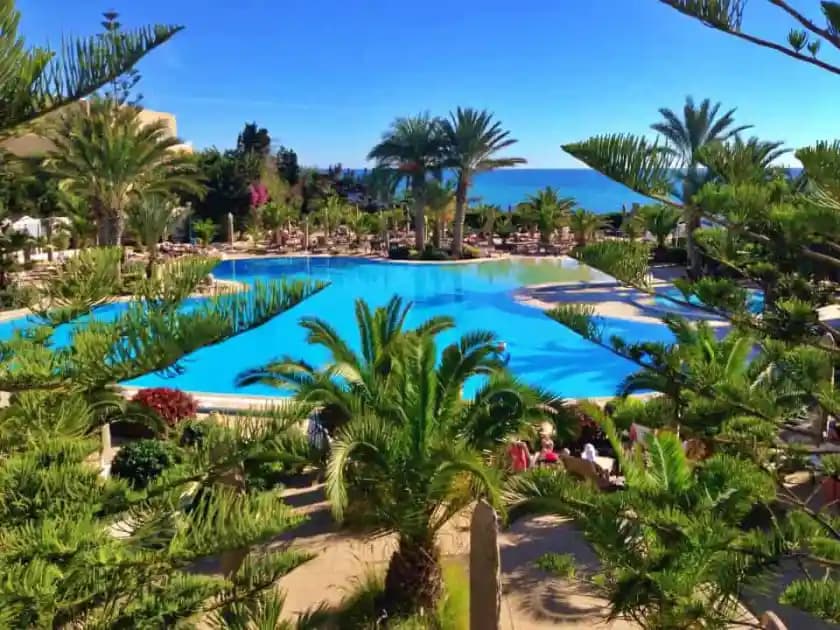
Tunisia's Mediterranean coastline is long, warm and varied. Sousse pairs a walled medina and historic ribat with easy beaches, making it a favourite base for families. Hammamet is the classic resort town, with sandy bays and a pretty old fortified quarter, while the island of Djerba in the south offers a gentler, more laid-back feel, with whitewashed villages, craft traditions, pottery and some of the country's best beaches.
The coast is where many travellers slow down between sightseeing days. It also works as a staging point: Sousse and nearby Monastir connect easily to El Jem, while Djerba is a natural gateway to the south and the desert.
Which Tunisian beach destination is best for a relaxing few days?
For a mix of beach and culture, Sousse and Hammamet are the most convenient, with plenty to see on foot when you want a break from the sand. For a quieter, more scenic island escape, Djerba is the top choice, especially if you also want easy access to southern Tunisia. The best beach weather runs from late spring through early autumn; see our guide on the best time to visit Tunisia for the details.
The Sahara and the Star Wars Filming Sites
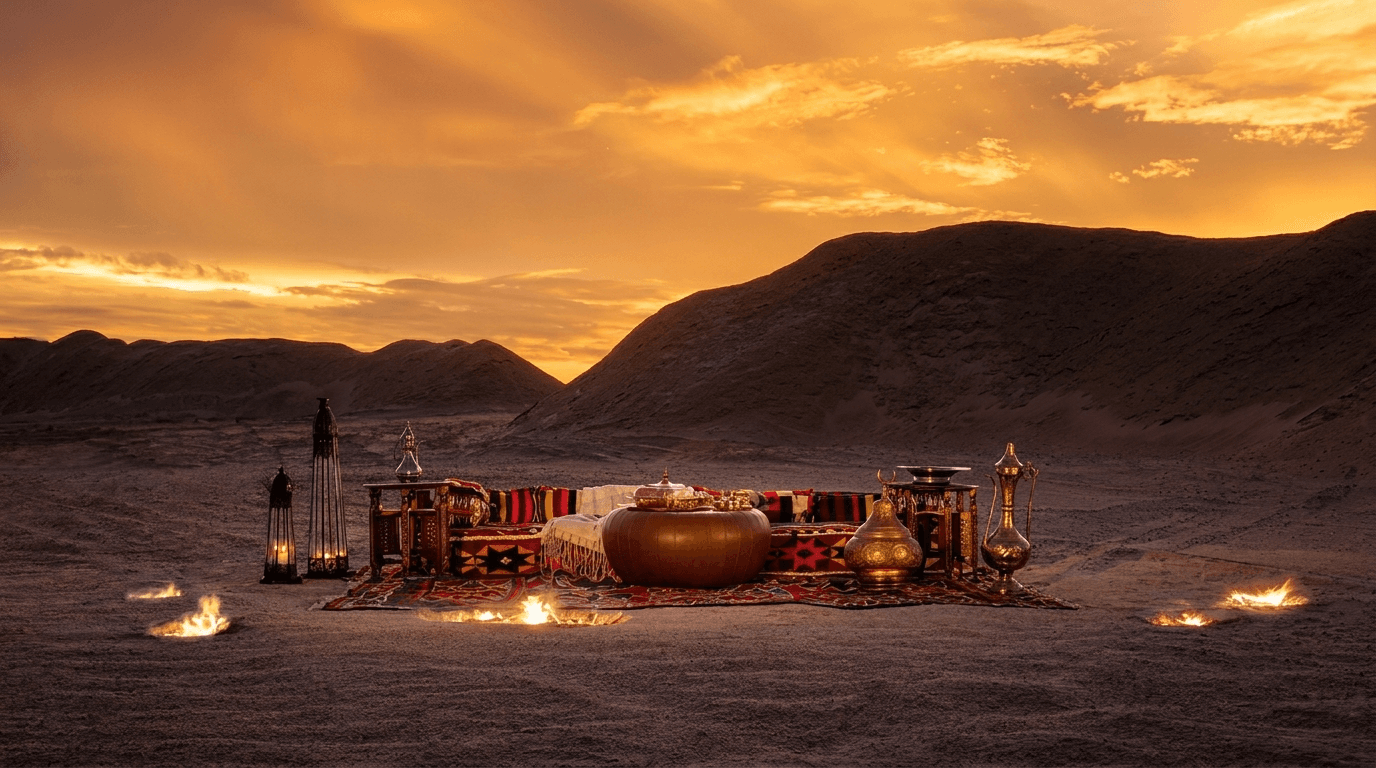
The south is Tunisia's most dramatic landscape and, for many, the trip's emotional high point. Around Tozeur you find palm oases, salt flats and the mountain oases of Tamerza and Chebika. Matmata is famous for its underground Berber dwellings carved into the earth, and Ksar Ghilane is a desert oasis on the edge of the true Sahara, perfect for a night under the stars.
Tunisia is also one of the great Star Wars pilgrimage destinations. Several locations near Tozeur, Nefta, Matmata and Ksar Ghilane stood in for Tatooine, and some sets still survive in the desert. Our Star Wars Tunisia guide maps out which sites are which, and our Sahara desert guide explains how to experience the dunes responsibly, whether by 4x4 or on a short camel trek.
Do you need several days to visit the Tunisian Sahara?
Plan at least two to three days if the desert is a priority. The south is a long drive from the coast, so a rushed day trip rarely does it justice. A typical loop takes you from the coast to Tozeur and the mountain oases, on to a desert camp or Ksar Ghilane, and back via Matmata, letting you fit the oases, the dunes and the film sites into one satisfying circuit.
Are the Star Wars sites in Tunisia easy to reach on your own?
Some are close to Tozeur and Matmata and reachable with a little planning, but several sit on rough desert tracks that really need a 4x4 and local knowledge. Signage is limited and a few sets are slowly being reclaimed by the sand. This is one area where a guided or private trip pays off, both for navigation and for the context a guide adds to each location.
How Many Days You Need to See the Highlights
How long you need depends on how much of the country you want. A short trip can capture the north; a fuller itinerary reaches the desert. Use this as a rough planning frame, and read our dedicated piece on how many days you need in Tunisia for sample routes.
| Trip length | What you can realistically see |
|---|---|
| 3-4 days | Tunis, Carthage, Sidi Bou Saïd, a coastal medina such as Sousse, plus El Jem |
| 5-7 days | The above plus Kairouan and a first taste of the south or the beaches |
| 8-10 days | North, coast and a proper Sahara loop with Tozeur, Matmata and a desert night |
| 12+ days | A relaxed grand tour including Dougga, Djerba and time to slow down |
What is the minimum time needed to see Tunisia's best sights?
You can see the essential northern highlights in about four days: the Tunis medina, Carthage, Sidi Bou Saïd, El Jem and a coastal town. To add Kairouan and the Sahara comfortably, aim for seven to ten days. Beyond that, extra time mostly buys you a slower pace and lesser-known sites like Dougga, Sbeitla and Tataouine rather than brand-new regions.
The Easiest Way to Combine Tunisia's Top Sights
Tunisia's attractions are spread out, and public transport between the smaller archaeological sites and the desert is limited. Many travellers find the sightseeing is far more enjoyable when the logistics are handled for them, so they can focus on the places rather than the timetables.
This is where a private tour makes the biggest difference. Atlantis Voyages, the Tunisian agency behind this site, arranges door-to-door trips with a private, air-conditioned car and a licensed, English-speaking guide. That means Carthage, El Jem, Kairouan and the Sahara linked in a single smooth itinerary, with the context and the driving taken care of. Independent travel is absolutely possible and rewarding, but a private trip simply removes the friction, especially for the harder-to-reach desert and film sites. When you are ready, you can plan your trip and we will shape an itinerary around the sights you care about most.
Start Planning Your Tunisia Highlights Trip
Tunisia's must-sees are closer together than they look on a map, and with a sensible route you can combine ancient ruins, living medinas, the coast and the desert in a single week or two. Decide which themes excite you most, pick a trip length that fits, and let a local team connect the pieces. When you are ready, plan your trip with Atlantis Voyages and travel Tunisia the easy, private, English-friendly way.