
For more than a century, Rome and Carthage fought for control of the western Mediterranean — three wars that ended with one of the ancient world's great cities erased from the map, and with Tunisia at the very centre of the story.
Carthage fell to Rome after the three Punic Wars (264–146 BC). Rome won the first war for Sicily, survived Hannibal's near-fatal invasion in the second, and finally besieged and destroyed Carthage itself in 146 BC. Carthage lost not because it lacked genius — Hannibal was among history's greatest generals — but because of Rome's deeper manpower, its loyal Italian allies, its naval persistence and its sheer refusal to give up. The ruins of that world are still visible across Tunisia today.
Who were Carthage and Rome?
Carthage was founded by Phoenician settlers from Tyre, traditionally in 814 BC, on the coast of what is now greater Tunis. By the 3rd century BC it was the richest city in the western Mediterranean — a sea power built on trade, a superb navy and a network of colonies across North Africa, Sardinia, western Sicily and southern Spain. Its people and civilisation are what historians call "Punic". Much of its later war effort would be driven by the powerful Barca family — the general Hamilcar, who fought in the first war, and his son Hannibal, who is said to have sworn as a child never to be a friend of Rome.
Rome, meanwhile, had grown from a city-state into the master of the Italian peninsula — a land power with a citizen army and a dense web of allied cities that could supply soldiers almost without end. For a long time the two powers had no quarrel. But as Rome reached the toe of Italy, it came face to face with Carthaginian Sicily — and the collision became inevitable.
The First Punic War (264–241 BC): the fight for Sicily
The first war began over the city of Messina in Sicily and turned into a brutal, 23-year struggle for the whole island. It was fought largely at sea — and here Rome did something extraordinary. Having no real navy, the Romans built one from scratch, reputedly copying a wrecked Carthaginian warship, and invented a boarding bridge (the corvus) that let their superior infantry fight sea battles as if on land.
The war was long and ruinously expensive for both sides, and it reached into Tunisia itself: a Roman army under Regulus landed on Cap Bon around 256–255 BC, and it was in this campaign that the Punic town of Kerkouane was abandoned, never to be rebuilt. In the end Rome prevailed, winning at the Aegates Islands in 241 BC. Carthage gave up Sicily and paid a heavy indemnity — its first great loss.
The Second Punic War (218–201 BC): Hannibal at the gates
The second war is the most famous, and it belongs to one man: Hannibal Barca. Rather than wait to be attacked, Hannibal marched an army — famously including war elephants — out of Spain, over the Pyrenees and across the Alps in 218 BC, and fell on Italy from the north.
What followed was a string of catastrophes for Rome. Hannibal crushed Roman armies at the Trebia, at Lake Trasimene, and above all at Cannae in 216 BC — still studied as one of the most perfect battles of annihilation ever fought, where a smaller Carthaginian force surrounded and destroyed a much larger Roman one. It was Rome's darkest hour.
And yet Rome did not surrender. It raised new armies, avoided pitched battle with Hannibal, and took the war elsewhere — to Spain and then, decisively, to Africa. The young Roman general Scipio Africanus invaded Carthage's homeland, forcing Hannibal to be recalled from Italy to defend it. The two met at the Battle of Zama, in Tunisia, in 202 BC, and Scipio won. Carthage sued for peace: it surrendered Spain, gave up its navy and its elephants, and paid a crushing indemnity. It was no longer an empire — but it was still alive, and it recovered its wealth with startling speed.
The Third Punic War (149–146 BC): the end of Carthage
That recovery was exactly the problem. A faction in Rome, led by the senator Cato the Elder — who is said to have ended every speech, on any subject, with "Carthago delenda est" ("Carthage must be destroyed") — could not tolerate a prosperous rival, even a disarmed one. On a thin pretext, Rome demanded that the Carthaginians abandon their city and move inland. They refused, and chose to fight.
The third war was a siege. For three years Carthage held out behind its great walls until, in 146 BC, Scipio Aemilianus stormed the city. The fighting was house to house, street by street, for days. In the end Carthage was burned, its surviving population killed or enslaved, and the city systematically demolished. (The popular story that the Romans "sowed the earth with salt" so nothing would grow again is a later myth, not recorded by ancient sources.) After seven centuries, Carthage was gone.
Why did Carthage fall?
If Hannibal was the greater general, why did Carthage lose? The answer is a combination of deep structural advantages on Rome's side:
- Manpower and allies. Rome could absorb staggering losses — even Cannae — and field new armies, because its Italian allies supplied a near-bottomless pool of soldiers. Carthage, relying heavily on hired mercenaries, could not replace losses as easily.
- Resilience and will. Rome simply refused to accept defeat, even when a lesser state would have made peace. That stubbornness, more than any single battle, decided the outcome.
- Adaptability at sea. In the first war, a land power taught itself to beat the Mediterranean's finest navy — and kept rebuilding fleet after fleet.
- Strategy over tactics. Rome lost battles but won the war by taking the fight to Africa, cutting Hannibal off from home and forcing the decisive clash at Zama on Rome's terms.
- Carthage's isolation. Hannibal was often left without reinforcement, and Carthage never built the kind of loyal, integrated alliance system that sustained Rome.
Carthage fell, in short, not to a better army on the day, but to a more durable state over the long run.
What Carthage's fall left behind — in Tunisia today
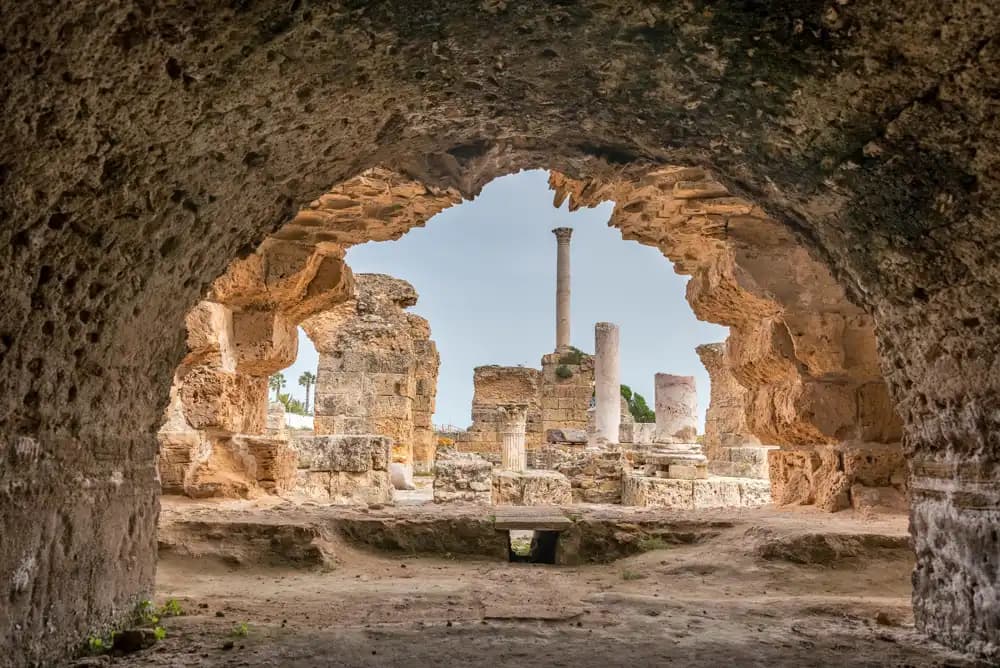
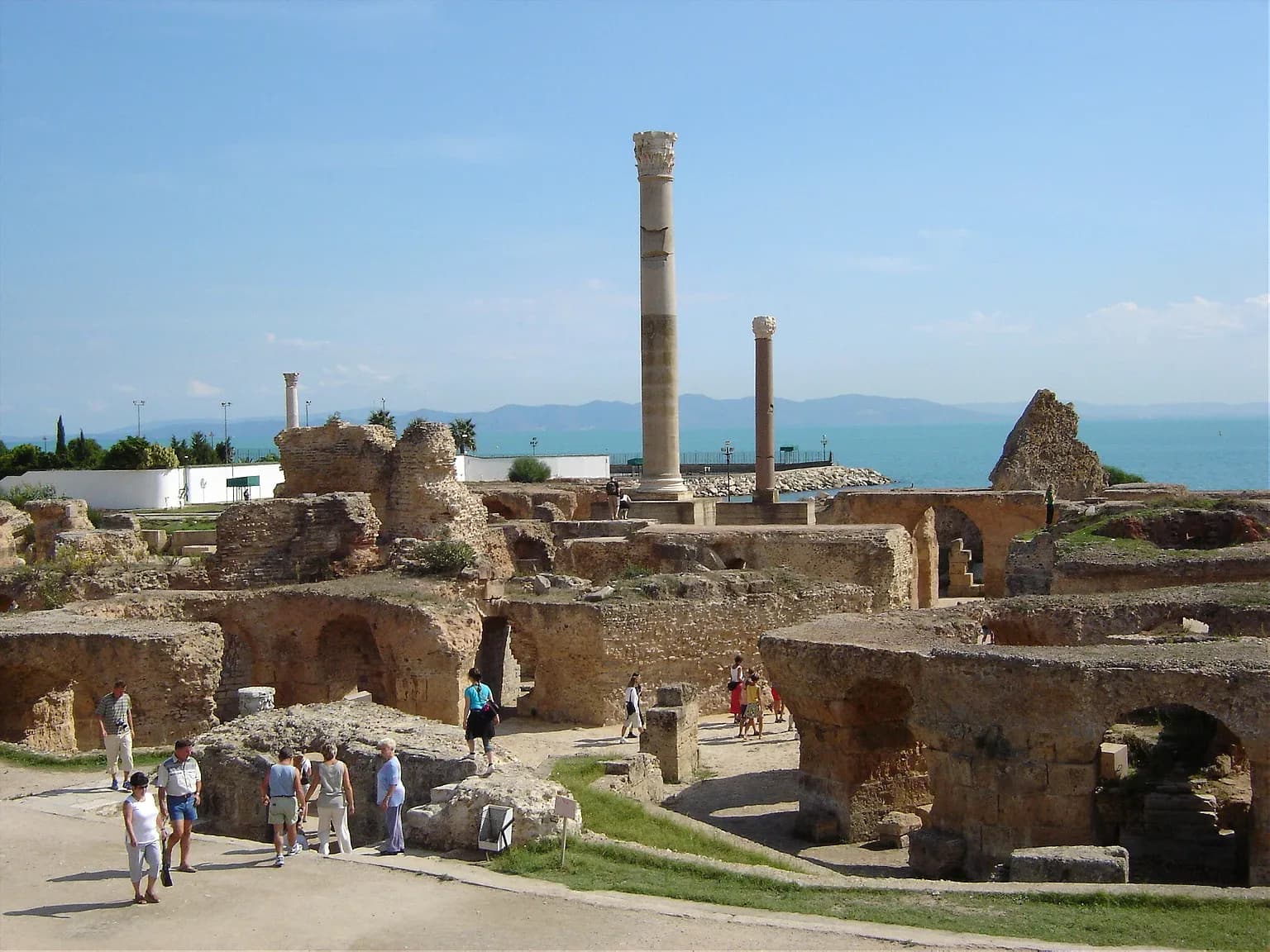
The story did not end in 146 BC. A century later, Rome refounded Carthage as a Roman colony, and it grew again into one of the greatest cities of the empire — the capital of the wealthy province of Africa Proconsularis. That Roman golden age is what fills Tunisia with monuments today: the vast amphitheatre of El Jem (see our El Jem guide), the complete hilltop town of Dougga (see our Dougga guide), and the ruins of Roman Carthage itself.
To see the Punic world that Rome erased, the one irreplaceable place is Kerkouane — the only Carthaginian town never built over. And the finest objects from all these sites, Punic and Roman, are gathered in the Bardo Museum in Tunis. Carthage, El Jem and Dougga are all among Tunisia's ten UNESCO World Heritage Sites — see them in our complete guide to UNESCO sites in Tunisia, or go deeper with our guide to Carthage.
Walking these ruins, the long duel between Rome and Carthage stops being a date in a textbook and becomes something you can stand inside. Atlantis Voyages can build a tailor-made history itinerary across them: browse our Tunisia tours or start planning your trip.
Frequently asked questions
How many Punic Wars were there?
Three, fought between Rome and Carthage from 264 to 146 BC: the First (264–241 BC), the Second (218–201 BC) and the Third (149–146 BC).
Why did Rome and Carthage go to war?
They were the two great powers of the western Mediterranean — Rome a land power, Carthage a sea power — and their expansion collided, first over Sicily and ultimately over who would dominate the region.
Why did Carthage lose to Rome?
Mainly because Rome had far deeper manpower through its loyal Italian allies, could absorb crushing defeats and keep fighting, adapted to beat Carthage at sea, and took the war to Africa — not because its generals were better.
Who was Hannibal?
Carthage's greatest general, who crossed the Alps with war elephants in 218 BC and won stunning victories in Italy — including Cannae in 216 BC — before being defeated by Scipio at Zama in 202 BC.
What was the Battle of Cannae?
Hannibal's masterpiece in 216 BC, where a smaller Carthaginian army encircled and destroyed a much larger Roman force. It was Rome's worst-ever defeat, yet Rome still refused to surrender.
Where was the Battle of Zama?
In present-day Tunisia, inland from Carthage, in 202 BC — where Scipio Africanus defeated Hannibal and ended the Second Punic War.
When was Carthage destroyed?
In 146 BC, at the end of the Third Punic War, when the Roman general Scipio Aemilianus took the city after a three-year siege.
Did the Romans really salt the earth at Carthage?
No — that is a later legend. Ancient sources record the city being burned and demolished, but not sown with salt.
What does "Punic" mean?
It refers to the Carthaginians and their civilisation — the western Phoenicians who built Carthage — from the Latin word for Phoenician, "Punicus".
Can you see sites from the Punic Wars in Tunisia?
Yes. Carthage itself is in greater Tunis, the only intact Punic town survives at Kerkouane, and Rome's later African capital left the great monuments of El Jem and Dougga.
What happened to Carthage after 146 BC?
Rome refounded it a century later as a Roman colony, and it became one of the empire's greatest cities and the capital of Roman Africa.
Who was Scipio Africanus?
The Roman general who turned the Second Punic War by carrying the fight to Africa and defeating Hannibal at Zama in 202 BC, earning the honorific "Africanus".
Who was Cato the Elder?
A Roman senator who relentlessly pushed for Carthage's destruction, famously ending his speeches with "Carthago delenda est" — "Carthage must be destroyed".
How long did the Punic Wars last?
They span 118 years, from the First War in 264 BC to the fall of Carthage in 146 BC, with long stretches of uneasy peace between the three conflicts.
Were the Carthaginians Phoenicians?
Yes — Carthage was founded by Phoenician settlers from Tyre, and the Romans called them and their culture "Punic", from the Latin word for Phoenician.
Why are there Roman ruins in Tunisia and not Carthaginian ones?
Because Rome destroyed Punic Carthage in 146 BC and rebuilt the region in its own image, so the great surviving monuments are Roman. The one intact Punic town is Kerkouane, which Rome never rebuilt.
Stand where Rome and Carthage met. Plan a tailor-made Tunisia history trip with Atlantis Voyages, or explore our guided Tunisia tours.